Building a real-time operational intelligence platform for a modern specialty manufacturer.
George Munguia·A few minutes·Apr 14, 2026
CustomerChattanooga Labeling Systems
IndustryPremium glass decoration & labeling
LocationChattanooga, Tennessee
DeployedLate 2025, ongoing
On the line · CLS
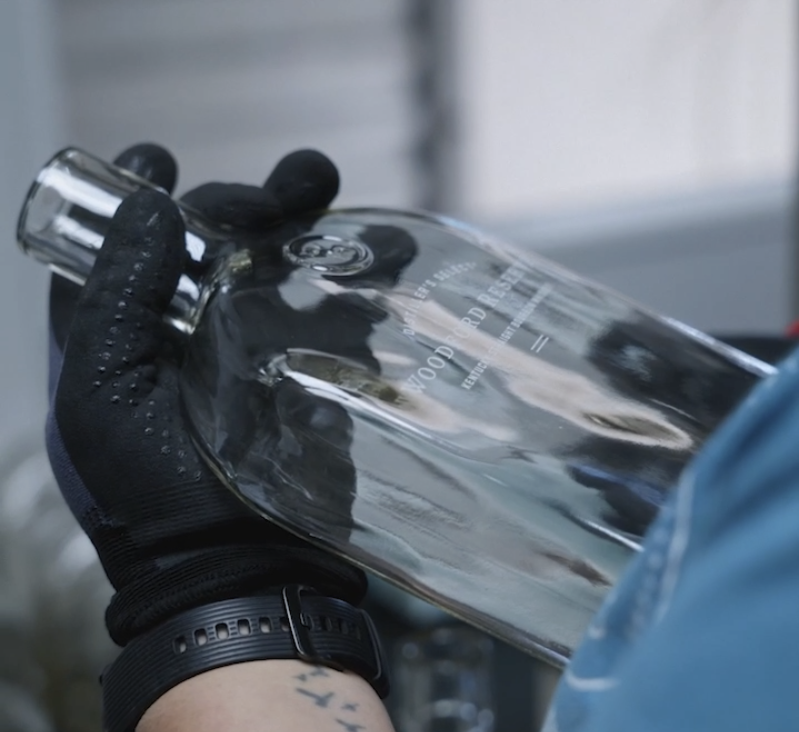
Floor·Premium spirits bottle on the CLS decoration line.Woodford Reserve·Labeling & decoration
Company Overview
A specialty manufacturer with deep roots in precision.
Chattanooga Labeling Systems (CLS) is a specialty manufacturer based in Chattanooga, Tennessee, focused on the decoration and labeling of premium glass bottles for the food and beverage industry. CLS serves a range of well-known brands across the sector, with particular depth in premium spirits. The company operates multiple high-throughput production lines and serves an exacting customer base that demands consistent quality and reliable delivery.
CLS is a family-owned business with deep roots in precision manufacturing. The leadership team has built a strong operational foundation over decades, and the company has developed significant institutional knowledge around its processes, equipment, and quality standards.
In late 2025, CLS's leadership made a deliberate strategic decision: to bring the company's technology infrastructure forward to match its operational sophistication. The goal was to digitize production workflows, improve the flow of real-time information across the plant, and unlock the value of data CLS was already generating but could not easily access.
CLS engaged Harmony AI to fix this.
Strategic Context
Knowledge on paper, not in the moment.
CLS had built effective operational processes over many years. Those processes generated substantial production data captured by skilled operators, supervisors, and production staff across every shift.
The challenge was not that CLS lacked operational knowledge. It was that much of that knowledge lived on paper, in spreadsheets, and in the minds of experienced employees, and was not easily accessible in the moment decisions needed to be made.
CLS's leadership identified three areas where improved technology infrastructure would generate meaningful operational returns.
Real-time production visibility.
Production data was captured manually throughout each shift. That information was accurate and thorough, but because it existed on paper until the end of a shift, supervisors and managers could not see production performance as it was happening. The opportunity was to make that data available in real time, not to generate more of it.
Production reporting efficiency.
Compiling daily production reports required meaningful manual effort each morning, collecting paperwork, consolidating figures, and building the reports that operations and management relied on. Automating that process would free up skilled staff time for higher-value work.
Institutional knowledge accessibility.
CLS had accumulated decades of operational documentation: machine specifications, production procedures, quality standards, and historical production records. Retrieving that information required manually searching files or tracking down experienced employees. AI-powered search had the potential to make that knowledge instantly accessible to anyone on the floor.
The Harmony AI Solution
One connected operational intelligence platform.
CLS partnered with Harmony AI to deploy a connected operational intelligence platform across the facility. The implementation introduced three core capabilities.
Digital production data capture.
Harmony replaced paper-based production logging with structured digital workflows. Operators now record production activity digitally at the point of work, eliminating handwritten records and the manual transcription steps that followed. Data is captured consistently and is immediately available to the system.
Real-time operational intelligence.
With production data captured digitally, Harmony surfaces operational performance in real time. Supervisors and managers can now monitor production output, line performance, downtime events, and operational disruptions as they occur, rather than reviewing them after the fact in a morning report.
Harmony also automates the daily production reporting process. Reports that previously required manual compilation each morning are now generated directly from shift data.
AI-powered knowledge search.
Harmony indexed CLS's operational documentation and historical production records, making them searchable through natural language queries. Employees can now retrieve machine documentation, production specifications, quality procedures, and historical data in seconds rather than spending significant time searching manually.
Results
Meaningful improvements across visibility, reporting, and knowledge access.
Since deploying Harmony, CLS has seen meaningful improvements across production visibility, reporting efficiency, and operational knowledge accessibility.
Area of impact
Outcome
Production data visibility
Paper-based → real time
Daily reporting process
Automated from shift data
Document & knowledge retrieval
Dramatically faster
Administrative reporting burden
Significantly reduced
Operational response capability
Earlier intervention enabled
From Delayed Reporting to Real-Time Visibility
Seeing the floor as it happens.
The shift from paper-based logging to digital capture is the most operationally significant change CLS has made. Supervisors who previously had no line-of-sight into production performance until reports were compiled the following morning can now see what is happening on the floor as it happens.
This has changed how the team responds to operational events. Issues that would previously have been discovered in a morning report can now be identified and addressed during the shift in which they occur.
Reduced Administrative Overhead
Automating the morning reporting lift.
Automating daily production reporting has recovered meaningful staff time each week. The manual effort previously required to compile shift data into reports, collecting paperwork, consolidating figures, entering data, has been substantially eliminated. That time is now available for work that requires human judgment.
Institutional Knowledge, Now Accessible
Decades of documentation, searchable in seconds.
Harmony's AI Search capability has changed how employees access operational information. Questions that previously required manually searching files or finding the right person to ask can now be answered in seconds. This has accelerated troubleshooting, reduced interruptions to experienced staff, and made CLS's accumulated operational knowledge available to more people across the organization.
In Their Own Words
What the CLS team said.
After meeting the Harmony team, it was clear they were different from any technology partner we'd encountered before. The implementation moved faster than anything we'd experienced, and their ability to build genuine relationships across our organization, from the executive team to the production floor, was remarkable. Within a few months, we were generating insights on our production data and operational workflows that would have been extremely difficult to produce before, if we could have produced them at all. We've already expanded our scope with Harmony and expect to continue growing the relationship. They're an exceptional team.
Tim KiserPresident, Chattanooga Labeling Systems
Harmony changed how we manage the production floor in a fundamental way. Before, we were working off information that was hours old by the time it reached us, now we can see what's happening on every line as it happens. That shift in visibility has changed how quickly we can identify and respond to issues during a shift rather than discovering them the next morning. The daily reporting process, which used to require meaningful manual effort to pull together, now happens automatically from the shift data. Our team adopted the system quickly, and the Harmony team was genuinely present through the implementation, they took the time to understand how our operation works, not just how their software works.
Ginny HughesChief Operating Officer, Chattanooga Labeling Systems
Looking Ahead
Operational depth plus modern infrastructure.
CLS and Harmony continue to build on the initial platform deployment. Ongoing work includes expanding the Harmony system's coverage of production scheduling, deepening integration with CLS's operational workflows, and continuing to develop the AI capabilities that serve the plant floor team.
For CLS's leadership, the investment in Harmony is part of a broader strategic commitment: building a manufacturing operation that combines the operational depth the company has developed over decades with the technology infrastructure needed to compete and grow in a demanding market.